Projector buying guide: how to choose the right projector

Buying a projector comes down to two specifications and a few sensible choices: enough brightness for your room, a throw distance that fits your space, and the right resolution and features for how you watch. Get those right and the badge matters far less. This guide walks through each one in plain terms, so you buy once and buy well.

Transparency: This article contains affiliate links. If you buy through one of them, we may earn a commission, at no extra cost to you. That is how we fund our testing and keep this site independent. More about how we test.

Contents

Our selection

Model Price Display technologyResolutionRated brightness Rating Link
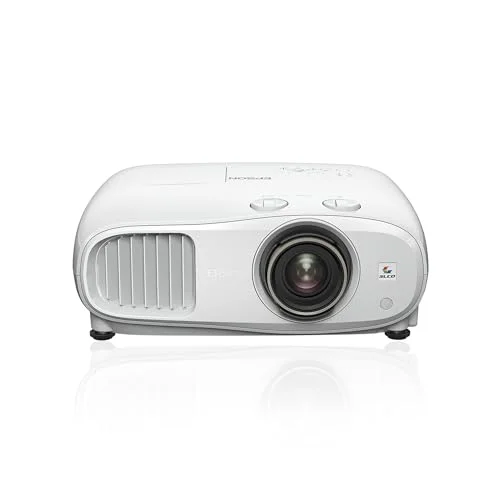
Epson EH-TW7100 4K PRO-UHD Home Cinema Projector ★ Top pick Epson EH-TW7100 4K PRO-UHD Home Cinema Projector £1,083.36 3LCD (3-chip)4K PRO-UHD (pixel-shifted 1080p)3,000 ANSI lumens ★ 4.7 View →
BenQ TK700STi 4K HDR Short-Throw Gaming Projector BenQ TK700STi 4K HDR Short-Throw Gaming Projector £1,726.99 Single-chip DLP4K UHD (3840 x 2160, XPR)3,000 ANSI lumens ★ 4.6 View →
Optoma UHD38 4K UHD HDR Home Cinema Projector Optoma UHD38 4K UHD HDR Home Cinema Projector £995.70 Single-chip DLP4K UHD (3840 x 2160, XPR)4,000 ANSI lumens ★ 4.5 View →
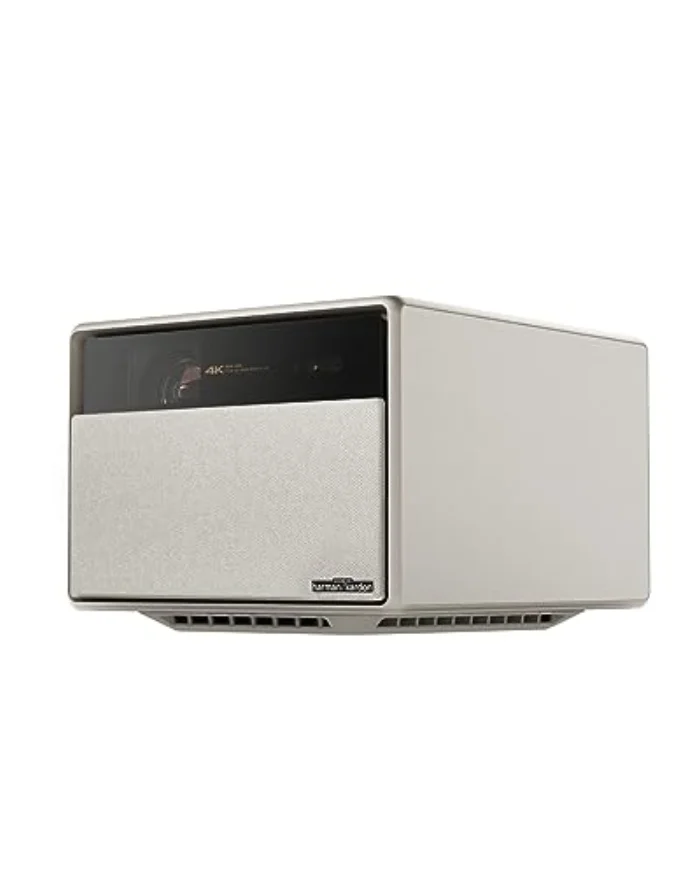
XGIMI Horizon Pro 4K Smart Laser-Hybrid Projector XGIMI Horizon Pro 4K Smart Laser-Hybrid Projector £758.99 Single-chip DLP, LED light source4K UHD (3840 x 2160)2,200 ISO lumens ★ 4.6 View →
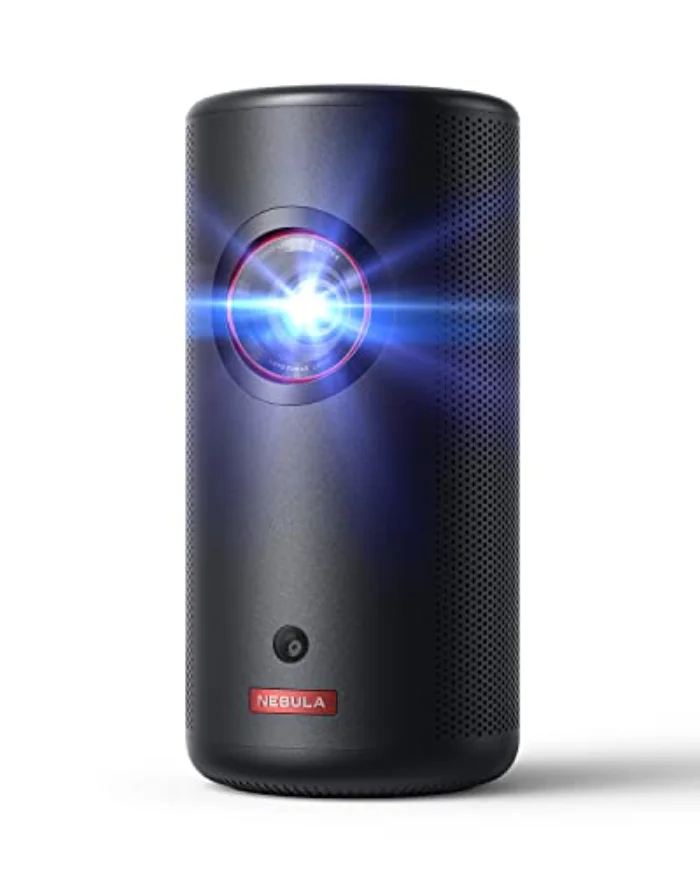
Anker Nebula Capsule 3 Laser Portable Projector Anker Nebula Capsule 3 Laser Portable Projector £404.00 Single-chip DLP, laser light source1080p (Full HD)300 ANSI lumens ★ 4.4 View →
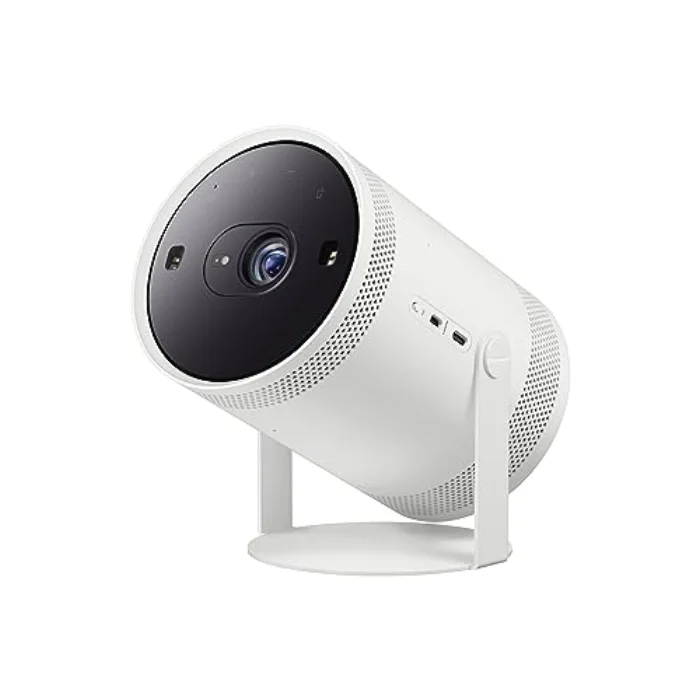
Samsung The Freestyle (2nd Gen) Portable Smart Projector Samsung The Freestyle (2nd Gen) Portable Smart Projector £665.06 Single-chip DLP, LED light source1080p (Full HD)230 ANSI lumens (550 LED lumens) ★ 4.3 View →
★ Top pick
Epson EH-TW7100 4K PRO-UHD Home Cinema Projector £1,083.36
Display technology : 3LCD (3-chip)Resolution : 4K PRO-UHD (pixel-shifted 1080p)Rated brightness : 3,000 ANSI lumens ★ 4.7/5
View on Amazon →
BenQ TK700STi 4K HDR Short-Throw Gaming Projector £1,726.99
Display technology : Single-chip DLPResolution : 4K UHD (3840 x 2160, XPR)Rated brightness : 3,000 ANSI lumens ★ 4.6/5
View on Amazon →
Optoma UHD38 4K UHD HDR Home Cinema Projector £995.70
Display technology : Single-chip DLPResolution : 4K UHD (3840 x 2160, XPR)Rated brightness : 4,000 ANSI lumens ★ 4.5/5
View on Amazon →
XGIMI Horizon Pro 4K Smart Laser-Hybrid Projector £758.99
Display technology : Single-chip DLP, LED light sourceResolution : 4K UHD (3840 x 2160)Rated brightness : 2,200 ISO lumens ★ 4.6/5
View on Amazon →
Anker Nebula Capsule 3 Laser Portable Projector £404.00
Display technology : Single-chip DLP, laser light sourceResolution : 1080p (Full HD)Rated brightness : 300 ANSI lumens ★ 4.4/5
View on Amazon →
Samsung The Freestyle (2nd Gen) Portable Smart Projector £665.06
Display technology : Single-chip DLP, LED light sourceResolution : 1080p (Full HD)Rated brightness : 230 ANSI lumens (550 LED lumens) ★ 4.3/5
View on Amazon →
BEST OVERALL
Epson EH-TW7100 4K PRO-UHD Home Cinema Projector - projector Epson

Epson EH-TW7100 4K PRO-UHD Home Cinema Projector

4.7/5

£1,083.36

3LCD (3-chip) · 4K PRO-UHD (pixel-shifted 1080p) · 3,000 ANSI lumens

  • 3LCD panel means no rainbow effect and full colour brightness
  • Measured 2,180 ANSI lumens holds up in a room with some ambient light
  • Vertical and horizontal lens shift makes placement genuinely flexible
  • Sharp pixel-shifted 4K with clean motion
  • A real 5,000-hour Eco lamp keeps running costs low
  • Lamp-based, so it needs a bulb change after a few years
  • No built-in streaming apps, you supply the source
  • Big 6.6 kg body wants a permanent shelf or ceiling mount
Brightness 5/5
Sharpness 5/5
Ease of setup 4/5
View on Amazon →
BEST FOR GAMING
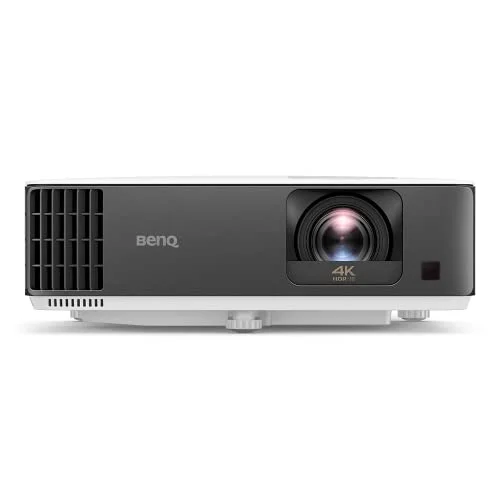
BenQ TK700STi 4K HDR Short-Throw Gaming Projector - projector BenQ

BenQ TK700STi 4K HDR Short-Throw Gaming Projector

4.6/5

£1,726.99

Single-chip DLP · 4K UHD (3840 x 2160, XPR) · 3,000 ANSI lumens

  • Outstanding 4.16 ms input lag at 1080p/120 Hz for gaming
  • Short 0.9:1 throw fills a 100 in screen from under 2 m
  • Bright 2,650 ANSI lumens copes with curtains-drawn daylight
  • Android TV dongle adds Netflix, Disney+ and more out of the box
  • Long 15,000-hour Eco lamp life
  • Single-chip DLP can show a faint rainbow effect to sensitive eyes
  • No lens shift, so you rely on keystone and placement
  • Built-in 5 W speaker is weak, use a soundbar
Brightness 5/5
Sharpness 4/5
Ease of setup 3/5
View on Amazon →
BEST VALUE
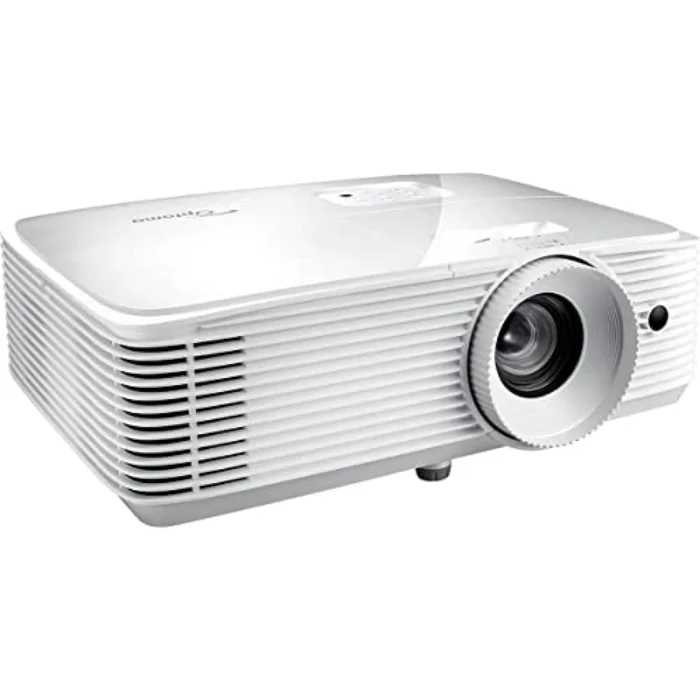
Optoma UHD38 4K UHD HDR Home Cinema Projector - projector Optoma

Optoma UHD38 4K UHD HDR Home Cinema Projector

4.5/5

£995.70

Single-chip DLP · 4K UHD (3840 x 2160, XPR) · 4,000 ANSI lumens

  • Brightest projector on test at a measured 3,290 ANSI lumens
  • Handles ambient light better than anything else here
  • Fast 4.2 ms input lag at 1080p/240 Hz suits gamers too
  • Strong value: 4K, HDR and high brightness for under £1,000
  • Long 15,000-hour Eco lamp life
  • No lens shift, only keystone and a small zoom
  • Fan noise rises in its brightest mode
  • Black levels lag behind the 3LCD Epson in a dark room
Brightness 5/5
Sharpness 4/5
Ease of setup 4/5
View on Amazon →
PREMIUM ALL-IN-ONE
XGIMI Horizon Pro 4K Smart Laser-Hybrid Projector - projector XGIMI

XGIMI Horizon Pro 4K Smart Laser-Hybrid Projector

4.6/5

£758.99

Single-chip DLP, LED light source · 4K UHD (3840 x 2160) · 2,200 ISO lumens

  • LED light source rated 25,000 hours, no lamp to replace
  • Genuinely good built-in Harman Kardon speakers
  • Android TV and autofocus make it a true plug-and-play box
  • Quiet running, around 32 dB
  • Slick, living-room-friendly design
  • Dimmest projector on test at a measured 1,510 ANSI lumens
  • Needs a properly dark room to look its best
  • Modest 1,500:1 native contrast
Brightness 3/5
Sharpness 4/5
Ease of setup 5/5
View on Amazon →
BEST PORTABLE
Anker Nebula Capsule 3 Laser Portable Projector - projector Anker Nebula

Anker Nebula Capsule 3 Laser Portable Projector

4.4/5

£404.00

Single-chip DLP, laser light source · 1080p (Full HD) · 300 ANSI lumens

  • Genuinely pocketable: a 950 g can you can carry anywhere
  • Built-in 2.5-hour battery for the garden or camping
  • Laser source rated 30,000 hours, autofocus and Android TV built in
  • Sharp 1080p picture for the size
  • Surprisingly capable 8 W speaker
  • Only 285 ANSI lumens, strictly a dark-room or after-dark projector
  • 1080p rather than 4K
  • Small image: tops out around a 120 in screen
Brightness 2/5
Sharpness 3/5
Ease of setup 5/5
View on Amazon →
BEST LIFESTYLE PICK
Samsung The Freestyle (2nd Gen) Portable Smart Projector - projector Samsung

Samsung The Freestyle (2nd Gen) Portable Smart Projector

4.3/5

£665.06

Single-chip DLP, LED light source · 1080p (Full HD) · 230 ANSI lumens (550 LED lumens)

  • Clever 180° cradle aims the picture at a wall or ceiling
  • Full Samsung Tizen smart TV with every major app
  • 360° speaker doubles as a smart speaker
  • Auto-focus, auto-keystone and auto-levelling really work
  • Light 0.83 kg lifestyle design
  • Dim at a measured 225 ANSI lumens, after-dark only
  • Most expensive of the small projectors for the brightness
  • 1080p and a 100 in image ceiling
Brightness 2/5
Sharpness 3/5
Ease of setup 5/5
View on Amazon →

Brightness and lumens: the decision that matters most

Brightness is the single most important thing to get right, and the one buyers most often get wrong. A projector throws light onto a wall, so the more light in your room, the brighter the projector has to be to fight it. Brightness is measured in ANSI lumens, a standardised figure, and here is the rough guide: around 1,500 ANSI lumens for a fully blacked-out room, 2,000 to 2,500 for a normal living room with the curtains drawn, and 3,000 or more to cope with real daylight or a lamp on. In our testing the brightest unit, the Optoma UHD38, measured 3,290 ANSI lumens, while the dimmest, the XGIMI Horizon Pro, measured 1,510. Both are good projectors, but they belong in very different rooms, so decide how dark your room gets first, then choose the brightness to match.

Be very wary of the brightness figure on the box. Many cheaper projectors quote "LED lumens" or "light source lumens", which can be three to four times higher than the real ANSI brightness you actually see, so a projector advertised at "9,000 lumens" for £200 is almost always measuring something other than ANSI lumens. Always look for a genuine ANSI figure, or an honest reviewer's measurement, and treat any huge lumen number on a cheap projector with suspicion. The brightness you see on the wall is what counts, not the number on the listing.

Throw distance: will it fit your room?

The second thing buyers get wrong, and it is just as avoidable with a tape measure, is throw distance. Throw distance is how far the projector must sit from the screen to produce a given image size, and it is set by the throw ratio: the distance divided by the image width. A 1.5:1 standard-throw projector needs 1.5 metres of distance for every metre of screen width, so roughly three metres to fill a 100-inch screen, while a 0.9:1 short-throw model like the BenQ TK700STi needs under two metres for the same picture. Measure the depth of your room and check the throw ratio against it before you buy. A projector that physically cannot reach the image size you want in your space is the most common and most frustrating mistake, and it is entirely preventable.

Placement flexibility matters too. Lens shift, as on the Epson EH-TW7100, lets you move the image up, down or sideways optically, so you can place the projector on a side shelf or off-centre and still line it up perfectly with no loss of sharpness. Without lens shift you rely on keystone correction, which squares a tilted image up digitally but softens it slightly, so it pays to position a no-lens-shift projector carefully and square-on. If you can place a projector dead-centre, keystone is no problem; if you cannot, lens shift is worth paying for.

Resolution: 4K or 1080p

For a home cinema projector watched on a 100-inch screen or larger from a normal sofa distance, 4K is worth having, and it looks noticeably sharper than 1080p on a big picture. Our three dedicated cinema picks, the Epson, BenQ and Optoma, are all 4K UHD between £999 and £1,199. For a portable projector used after dark on a smaller image, 1080p is the sensible choice, because the small, dim picture would not show off 4K and the lower resolution keeps the price and battery demands down, which is why the portable Anker and Samsung here are 1080p. Match the resolution to the size of picture you will actually watch: huge screen, go 4K; small, casual picture, 1080p is plenty.

Lamp, LED or laser: the light source

Projectors use one of three light sources, and the choice affects brightness, noise and running costs. Lamp projectors like the Epson and Optoma are usually the brightest for the money but need a bulb change every few thousand hours, typically £60 to £120 a time. LED sources, as in the XGIMI and Samsung Freestyle, run for around 25,000 hours with no bulb to replace and are often quieter, but cost more per lumen. Laser, as in the Anker Capsule 3, lasts longest and turns on instantly. For maximum brightness on a budget, choose lamp; for the lowest running costs over a decade of use, choose LED or laser. There is also the choice of light engine, 3LCD (as on the Epson) has no rainbow effect and full colour brightness, while single-chip DLP is sharp and compact but can show a faint rainbow to sensitive eyes.

Smart features and sound: nice to have, not essential

Some projectors stream and play sound on their own, and some expect you to add a stick and a soundbar. The all-in-one XGIMI Horizon Pro and the portable Samsung Freestyle and Anker Capsule 3 have a full smart TV and usable speakers built in, so they work out of the box, which is ideal if you want simplicity. The dedicated cinema projectors like the Epson and Optoma expect a separate streaming stick and a soundbar or AV receiver, which sounds and looks better but means a little more kit. Built-in speakers on a projector are rarely good enough for serious film watching, so for a home cinema plan on proper sound regardless. Decide whether you value an all-in-one box or the better picture and sound of separates, and choose accordingly.
Frequently asked questions

Q
What is the most important spec when buying a projector?

Brightness, measured in ANSI lumens, matched to the light in your room. A projector that is too dim for your space will disappoint no matter how good the rest of its specification looks. Decide how dark your room gets first, then choose the brightness to suit, and only then weigh up resolution, throw distance and smart features.

Q
What does throw ratio mean?

Throw ratio is the distance from the projector to the screen divided by the width of the image. A 1.5:1 standard-throw projector needs 1.5 metres of distance for every metre of screen width, while a 0.9:1 short-throw projector needs less. Check the throw ratio against the depth of your room and where you can place the projector before you buy, because a projector that cannot reach the image size you want in your room is the most common and most avoidable mistake.

Q
Should I buy a lamp, LED or laser projector?

Lamp projectors like the Epson and Optoma are usually the brightest for the money but need a bulb change every few thousand hours. LED and laser projectors such as the XGIMI and Anker run for 20,000 to 30,000 hours with no bulb to replace, are often quieter, but cost more per lumen. For maximum brightness on a budget, choose lamp; for the lowest running costs and least maintenance, choose LED or laser.

Our advice in one paragraph

Decide how dark your room gets and how big a picture you want first, then buy the projector with enough ANSI lumens for that room and a throw ratio that fits your space, and match the resolution to your screen size. That sequence matters more than chasing brand names. For a darkenable living room our best overall pick is the Epson EH-TW7100, with the Optoma UHD38 the brighter value choice for a lighter room and the BenQ TK700STi for gaming. For an effortless all-in-one choose the XGIMI Horizon Pro in a dark room, and for portability the Anker Nebula Capsule 3 or the lifestyle Samsung Freestyle. If you are still weighing a projector against a television, read our guide to projector vs TV, and see exactly how we reach our conclusions on our how we test page.